
Choosing a microcentrifuge begins with the maximum RCF and appropriate RPM for the lab’s samples. Rotor types and tube compatibility (0.2–2 mL plus adapters) must match protocols. Capacity, footprint, noise, and run-time affect daily workflow and bench placement. Safety features, simple controls, and low-maintenance designs reduce downtime Benchtop centrifuge. Budget, warranty, and vendor support determine total cost of ownership. Further guidance outlines trade-offs and selection steps to refine the best fit for specific needs.
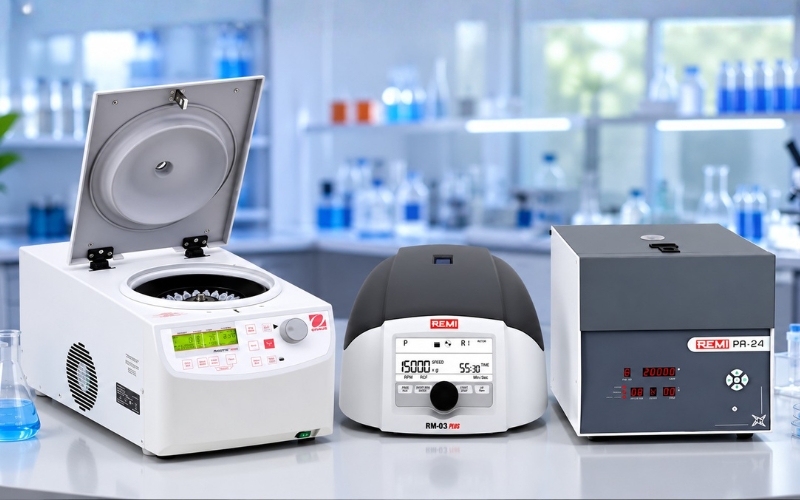
Choose Max RCF and Speed for Your Microcentrifuge
How fast should a microcentrifuge spin to meet laboratory needs? The evaluator considers maximum RCF and RPM as primary specifications. Maximum RCF determines effective sedimentation for particles and biomolecules.
RPM relates to rotor size https://laballiance.com.my/, so users calculate RCF from RPM and radius to confirm required force. Select a centrifuge whose top RCF exceeds protocol demands, allowing margin for future assays.
Balance speed with sample integrity: fragile preparations may require lower forces over longer durations. Noise, run time, and acceleration profiles also affect workflow freedom and convenience.
Maintenance and safety interlocks preserve autonomy by reducing downtime. Clear, measured choices yield a centrifuge that supports diverse applications without unnecessary constraints.
Match Microcentrifuge Rotors and Tube Compatibility (0.2–2 mL, Adapters)
After selecting an instrument with appropriate RCF and speed, attention turns to matching rotors and tube formats to intended assays. Compatibility guarantees reliable pelleting, balance, and sample integrity.
Users should verify rotor type—fixed-angle for quick spins, swing-bucket for gentle layering—and confirm tube size range (0.2–0.5–1.5–2.0 mL).
Adapter availability matters: quality inserts permit smaller tubes without compromising alignment or speed ratings. Material choice (polypropylene, certified PCR-safe) and tube shape affect sealing and heat transfer.
Confirm rotor maximum RPM/RCF with intended tube loads and check manufacturer guidance on mixed-size loading.
Prioritize systems that allow straightforward adapter swaps and clear labeling to enable flexible workflows while maintaining safety and reproducibility.
Right-Size Capacity, Footprint, and Noise for Your Bench
Selecting a microcentrifuge involves balancing sample throughput with available bench space and ambient tolerance for operational noise. Users evaluate maximum tube count and run frequency against daily workflow to choose a capacity that avoids underuse or bottlenecks.
Footprint matters: compact units free bench real estate for other equipment and support a flexible lab layout, while taller or wider models may require dedicated surfaces.
Noise level affects concentration and comfort; quieter models enable open-plan collaboration and extended runs without intrusive sound.
Consider stackable or portable models when mobility and modularity are priorities.
Energy consumption and cooling vents influence placement.
Ultimately, selecting size, shape, and acoustics empowers a laboratory to operate with autonomy, optimizing productivity without compromising spatial freedom.
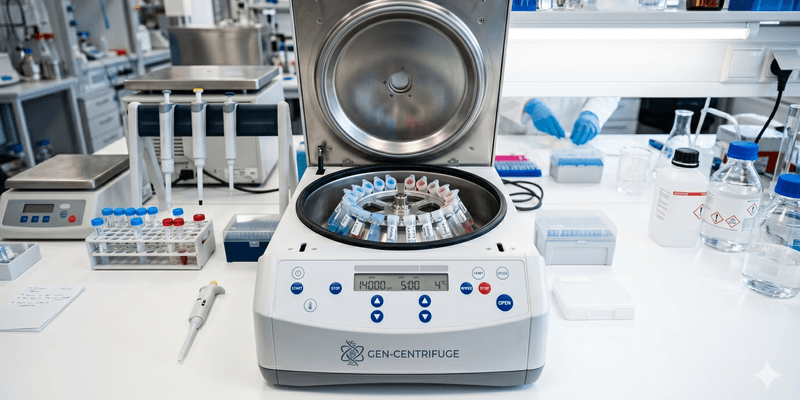
Prioritize Safety, Controls, and Maintenance: What To Check?
When evaluating a microcentrifuge, prioritize safety interlocks, intuitive controls, and straightforward maintenance to reduce user error and downtime.
The ideal unit offers clear rotor locking, automatic lid cutoffs, and imbalance detection to protect samples and operators while enabling confident, independent use.
Controls should be simple, logically labeled, and support quick program recall so users can move freely between tasks without complex training.
Maintenance needs must be minimal: easily removable rotors, tool-free lid access, and accessible seals that can be inspected or replaced without service calls.
Materials should resist corrosion and permit routine wiping.
Clear status indicators and straightforward error codes allow rapid troubleshooting.
Prioritizing these features preserves autonomy, speeds workflow, and lowers operational interruptions.
Budget, Warranty, and Vendor Checklist for a Smart Buy
How much should be allocated for a microcentrifuge depends on required features, expected throughput, and long-term operating costs. A clear budget plan balances upfront price, consumables, power use, and potential service fees.
Warranty terms are decisive: length, coverage for parts and labor, response times, and whether calibration or software updates are included.
Vendor selection favors transparency, documented performance, accessible spare parts, and local technical support to preserve autonomy in scheduling and maintenance.
Comparative quotes should list installation, training, and return policies. Seek references, uptime guarantees, and flexible purchase or lease options that align with changing needs.
Decisions guided by these criteria enable confident procurement without needless constraints or hidden obligations.
Conclusion
Selecting the right microcentrifuge requires balancing performance, compatibility, and practicality. Laboratories should prioritize sufficient RCF and speed, guarantee rotor and tube compatibility (including adapters), and choose an appropriate capacity and footprint that minimizes noise. Safety features, intuitive controls, and simple maintenance are essential. Finally, align purchase decisions with budget, warranty, and reliable vendor support to ensure long-term value and uninterrupted workflow, making the instrument a dependable bench partner.
